How Digital Azul Delivers Events in Places Where Coverage Fails
By João Tocha, Founder – Digital Azul
Live production doesn’t happen in controlled studios anymore. It’s moved out into the streets, onto rooftops, inside historical monuments, and basically anywhere audiences gather. Clients want mobility without losing stability, immediacy without sacrificing reliability, and creative freedom without worrying about whether something is technically possible.
Over the past year, we’ve been asked to support events that simply can’t be delivered through traditional connectivity. Some happened kilometres apart, others were constantly moving, and some took place where there was no fixed internet. Or any internet at all. In these situations, resilience becomes the real measure of quality. And the key to resilience is a workflow built around bonding, redundancy and an MCR designed to absorb complexity.
A Christmas night in Sintra with no internet and 3,000 people waiting
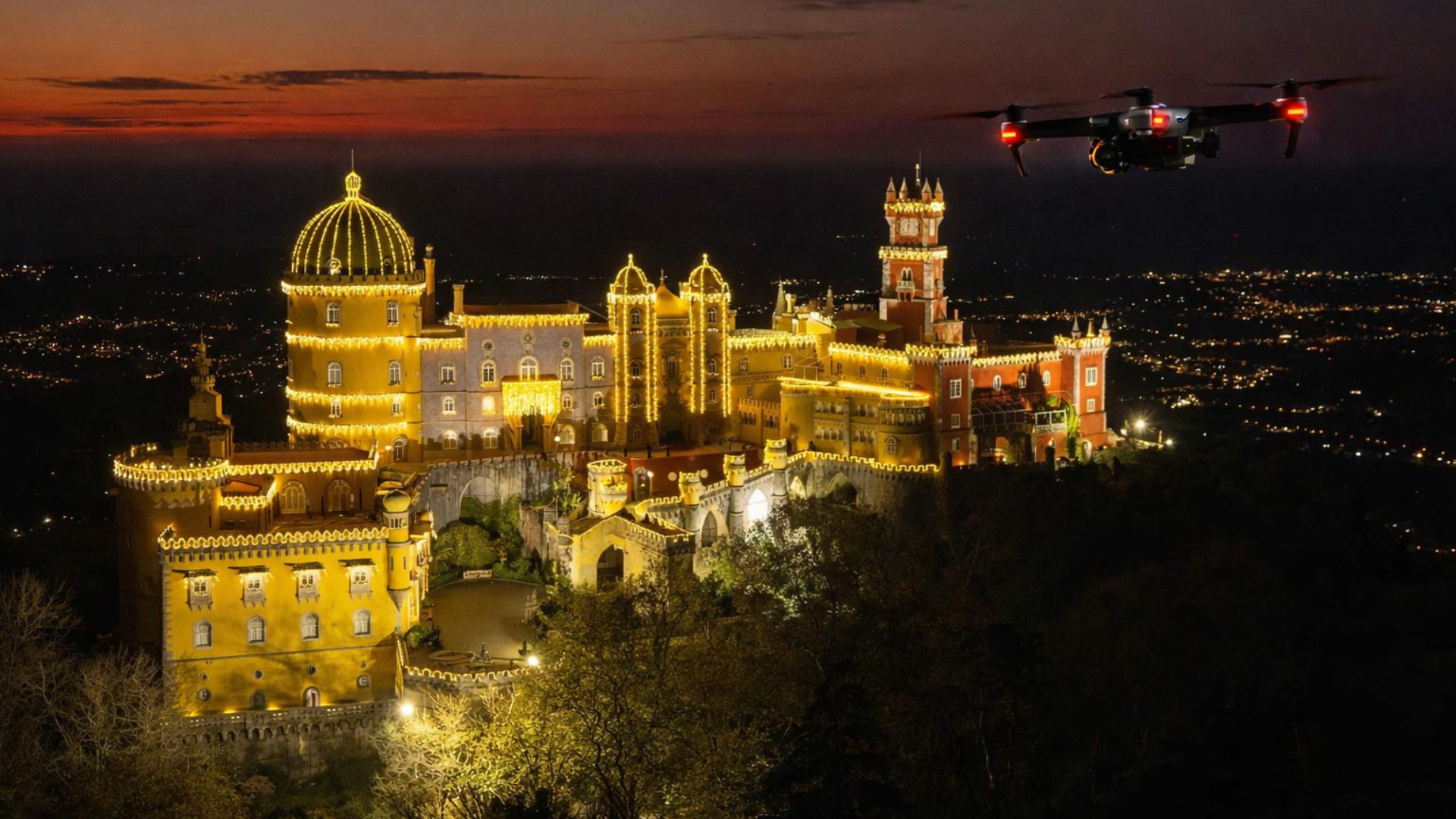
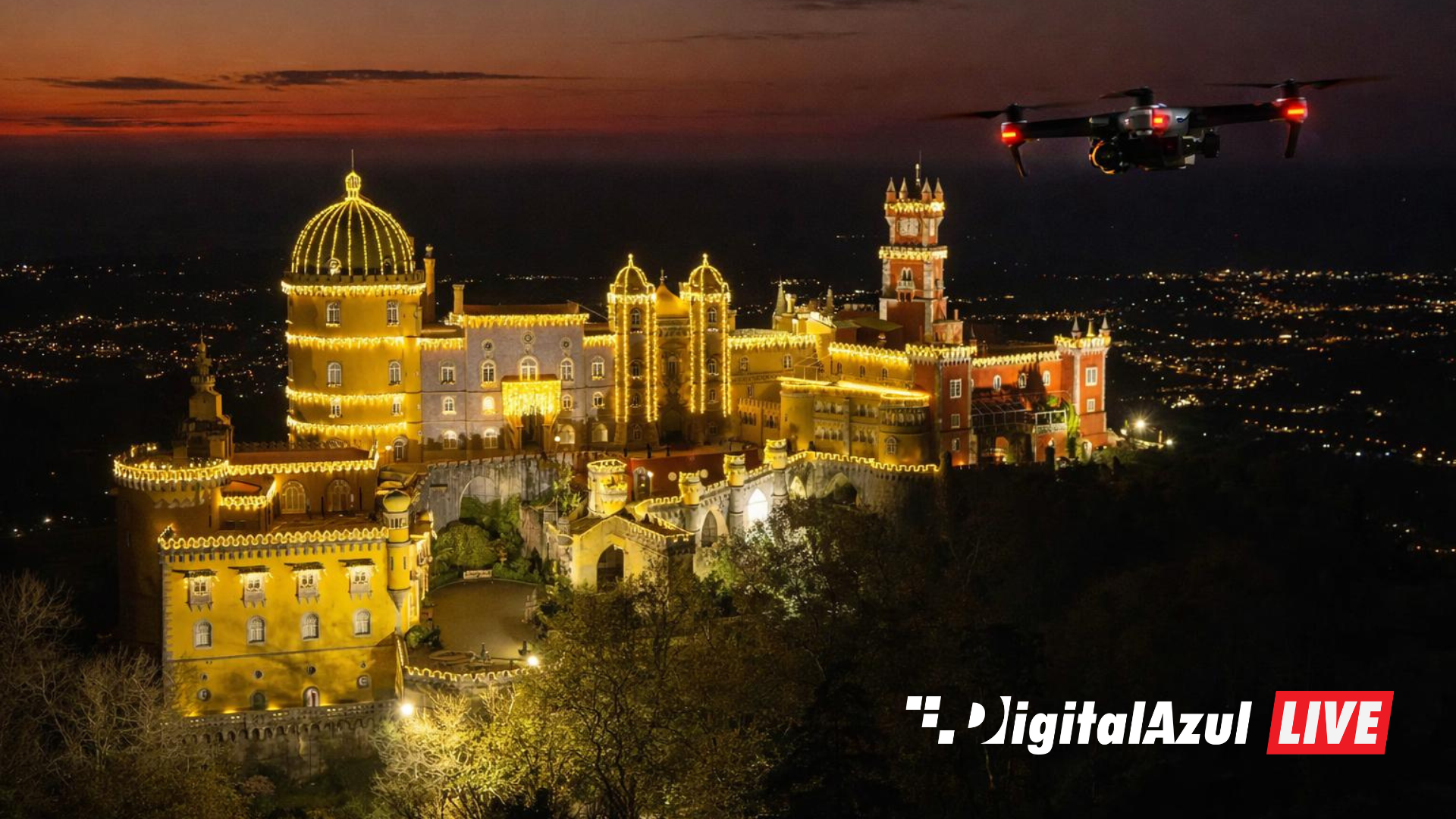
One of the most demanding examples took place in Sintra during the switching on of the city’s Christmas lights. Three monuments were illuminated at the same moment, with the client operating three drones positioned across the region. One hovered above Quinta da Regaleira, anotherflew near Palácio da Pena, around three kilometres away, and a third captured live images above the Palace of Queluz.
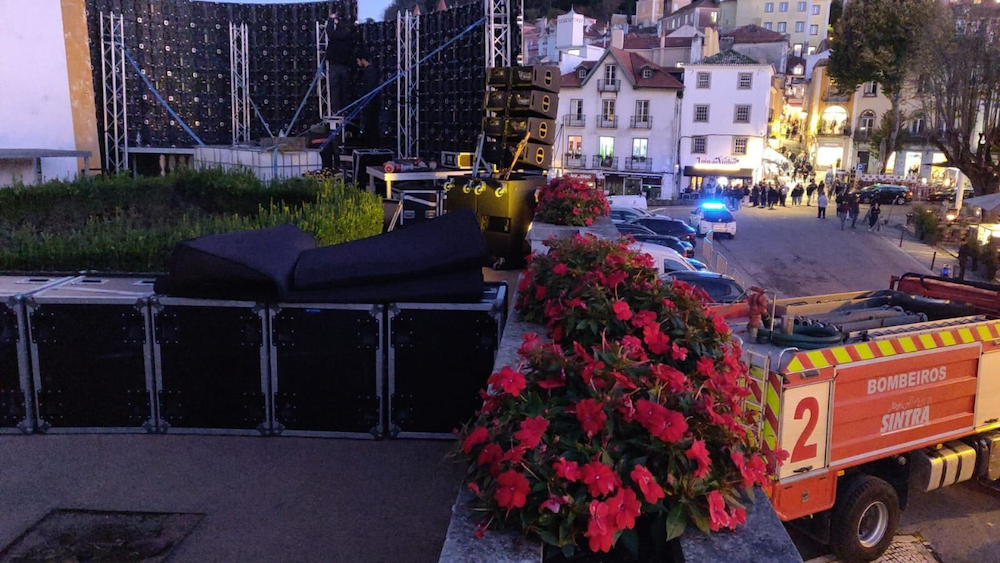
There was no fixed power at the drone locations, no ethernet, no local network of any kind. What did exist was a public square (Praça do Município) completely packed with more than 3,000 people waiting to see a real-time view of what was happening across Sintra.
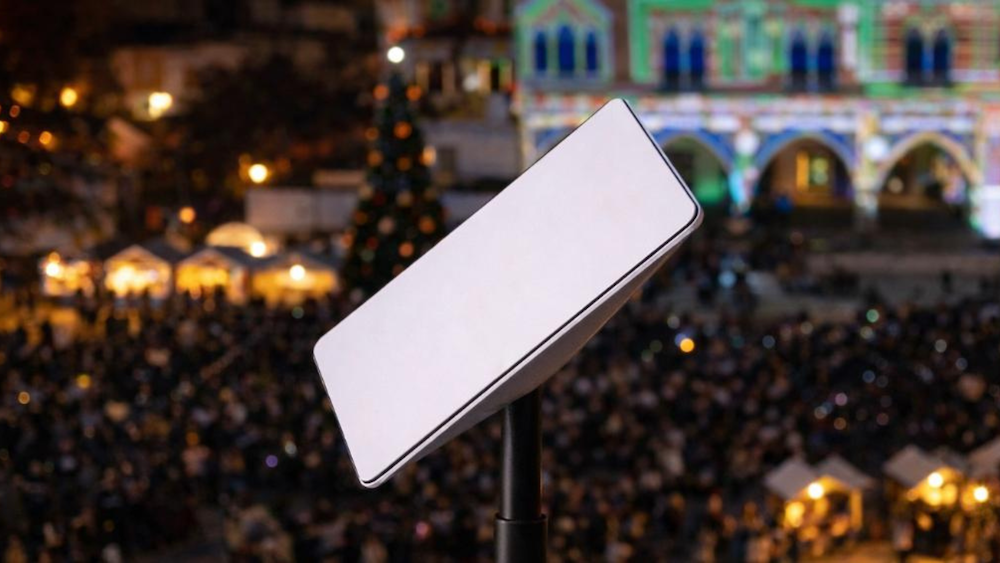
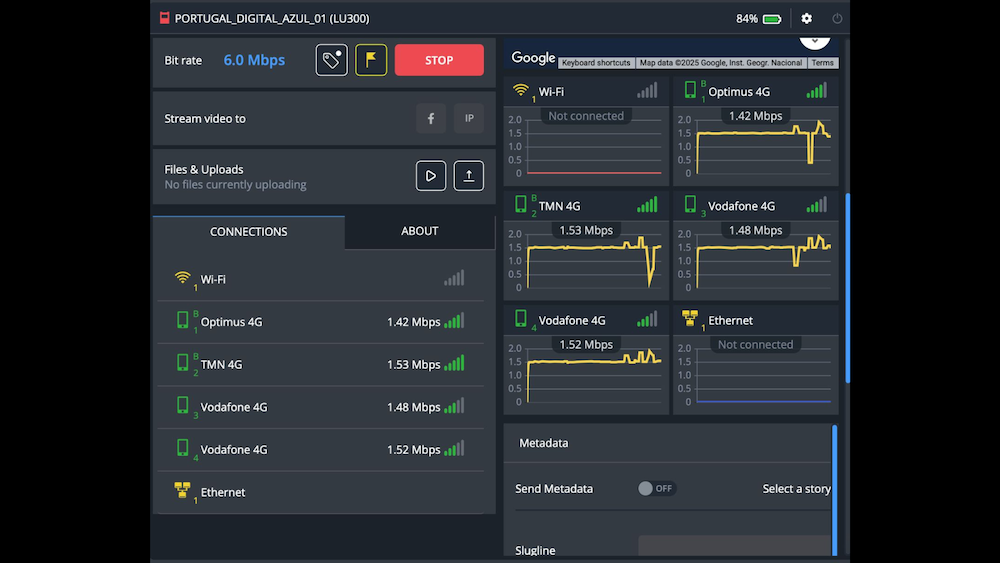
We deployed three mobile battery-powered bonded encoders, each connected directly to the HDMI output of the drone controllers. All contribution paths were sent to a central Intinor decoder installed in the main square, which itself had no terrestrial connectivity. The decoder accessed the public internet through a hybrid uplink combining a Starlink terminal with four 5G modems, providing enough redundancy to maintain the required bitrate for each 1080p25 feed at around 1000ms latency.
From there, SDI outputs fed the LED wall in real time. The result was a coherent live experience delivered with no infrastructure, no fixed lines, no controlled conditions. Just a workflow engineered to survive exactly this type of scenario.
A second challenge where a live stream could never go dark
The second example required a different kind of mobility. A music artist launched his new album with the expectation that he would remain live on camera throughout the entire event, including while moving between locations.
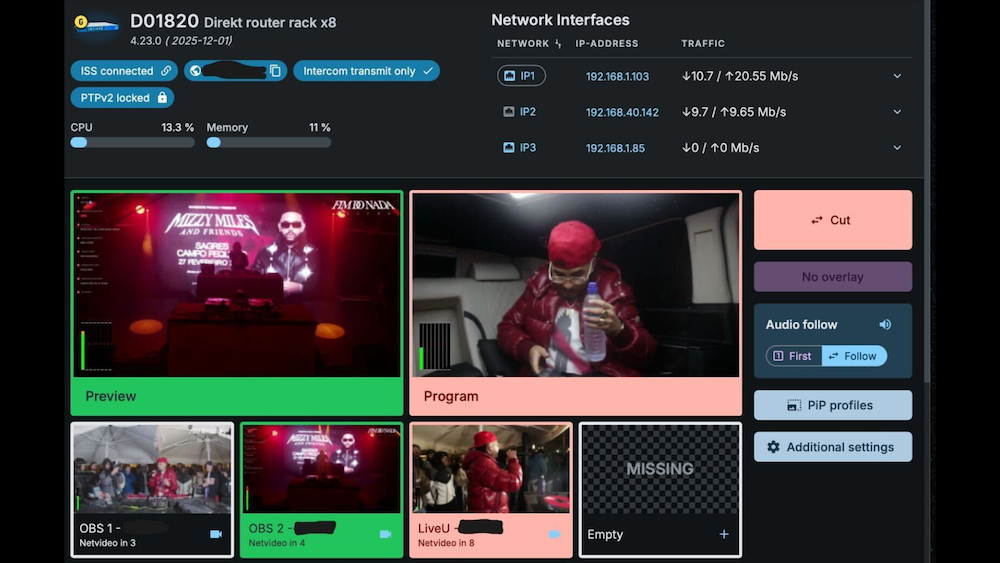
Two temporary multicamera setups, both running OBS, were installed at separate venues in Lisbon. A roaming camera then followed the artist from Campo Pequeno to Mercado da Ribeira, travelling through heavy rain and continuing live as it moved inside the Mercado da Ribeira building. The contribution was transmitted using a LiveU unit equipped with multiple SIM cards, maintaining bonded connectivity and a continuous feed back to the MCR.
Our MCR in Lisbon received all feeds (OBS, LiveU and backstage contribution) and handled live switching, graphics and publishing to YouTube and TikTok.
At one point, after seeing the stability of the connection during the car segment, the client said something that summarised the event better than any technical description could.
“Está mesmo muito bom. Nunca pensei. Parece que está ligado por cabo. Feitiçaria autêntica.”
(English translation: “This is really good. I never thought it would be. It looks like it’s connected by cable. Pure magic.”)
The launch demonstrated how far bonded streaming has evolved when supported by an MCR that manages movement and connectivity so the client does not have to.
Why this matters
Centralising complexity isn’t a luxury. It’s what makes these events possible.
Our MCR integrates LiveU, Intinor, Haivision, Starlink, bonded cellular, SRT, RIST, intercom over IP and full signal management. This ecosystem allows us to receive, stabilise and deliver contributions from almost any source, whether that’s a drone over a monument, a camera travelling through a city, or a producer running a remote OBS setup.
Some of the 30+ international events we delivered over the last year took place in challenging locations where connectivity was fragile or non-existent. Others were technically demanding because of distance, mobility or format. In all of them, the principle remained the same.
The client should never have to worry about the technical path behind the picture.
Taking responsibility so clients can stay focused on the moment
Every event is different. Distance, terrain, weather, crowd density, device mobility, redundancy requirements. None of these variables belong to the organiser. They belong to us.
Our role is to absorb the complexity and return stability. To take unpredictable networks and turn them reliable ones. To transform mobility into continuity.
Whether the feed comes from a drone over Regaleira, a car cutting across Lisbon in the rain, or a remote location with minimal coverage, our job is to receive it, stabilise it and deliver it to the destination that matters. LED walls, broadcasters, or global social platforms.
Looking ahead
As events move further into public spaces and as mobility becomes central to storytelling, the ability to combine multiple contribution paths, maintain bonded resilience and operate from an adaptable MCR will define the next era of live production.
The technology will keep changing. The expectation won’t.
The moment still needs to be captured and delivered without interruption.
At Digital Azul, our commitment is simple. Wherever the event takes place, the live experience must reach its audience, clean, stable and in real time.
Behind the Scenes of the Sintra Christmas Lights